Home/Technology
The technology inside every Winback
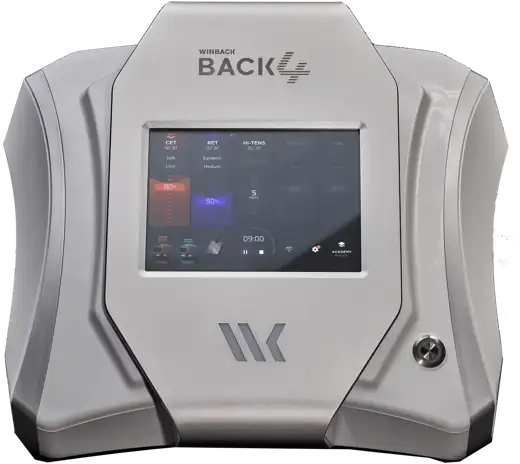
Winback is a multimodality system built around your patient's needs: TECAR for tissue, Hi-EMS for muscle and Hi-TENS for pain, in one device. Here's what each one does and where it fits in a plan of care.
Why multiple currents.
A patient in front of you usually needs more than one thing: the pain settled, the tissue worked, the muscle switched back on. Each Winback current has its own job, and you choose the one that fits the goal of the moment.
TECAR
High-frequency energy that works inside the tissue, in capacitive (CET) and resistive (RET) modes.
Hi-EMS
Muscle stimulation that triggers strong contractions to re-engage and rebuild muscle.
Energy that works inside the tissue.
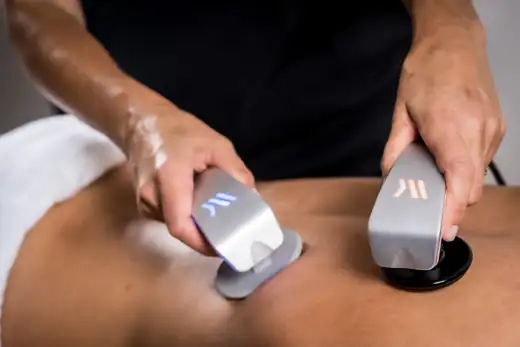
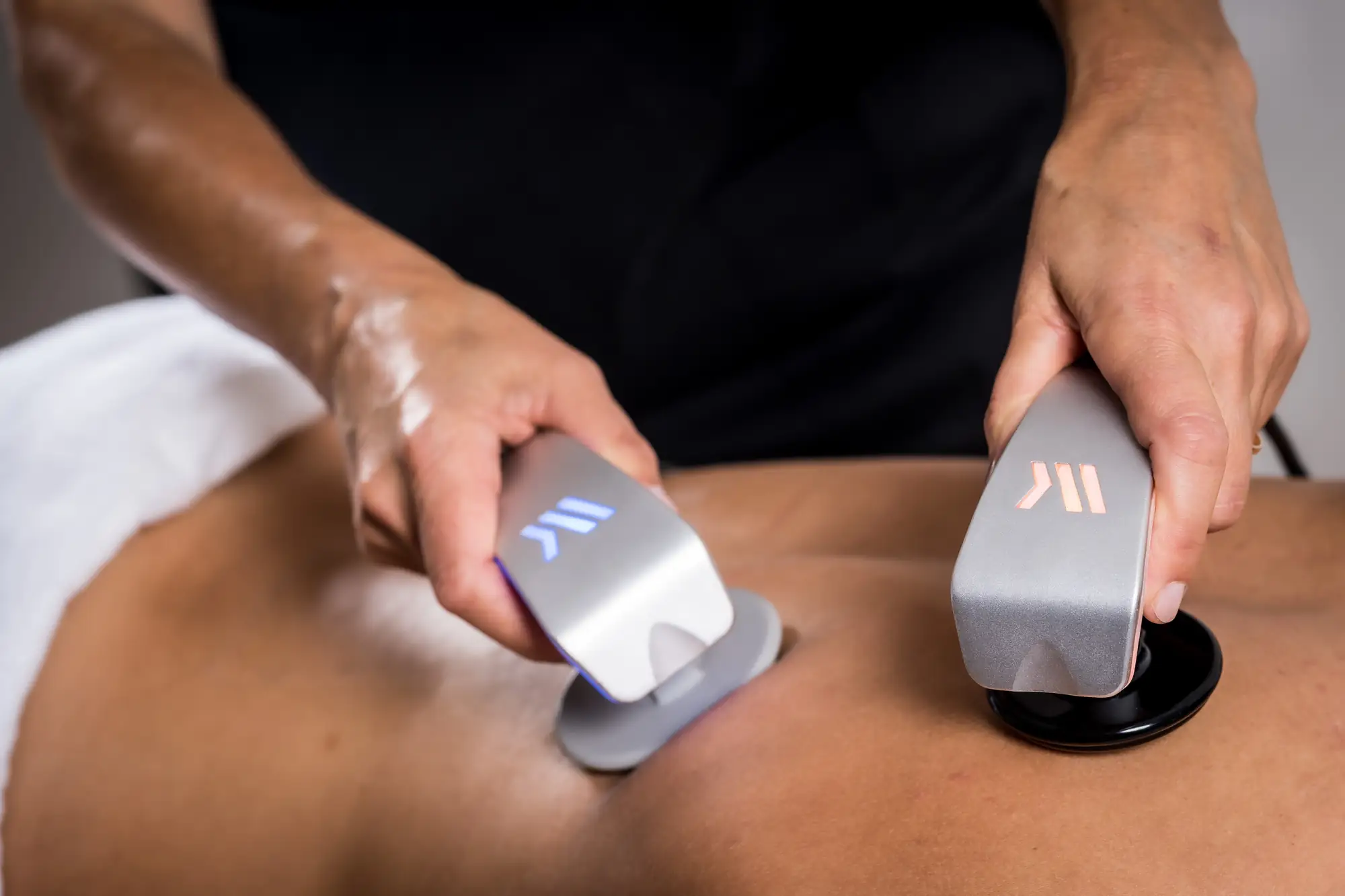
TECAR stands for Transfer of Energy Capacitive and Resistive. A high-frequency current oscillates between an electrode and a return plate, through the tissue in between. Instead of acting on the surface, the energy is generated inside the tissue itself, which is why patients feel warmth rather than pressure or impact.
In capacitive mode the electrode is insulated, so energy concentrates in softer, water-rich tissue like muscle. In resistive mode it is uninsulated, so the energy travels deeper toward denser structures: tendon, fascia, ligament and joint capsule. Winback units run TECAR at 300, 500 and 1000 kHz, and clinicians switch between modes, or blend them with MIX, depending on what they're treating.
See where the energy goes.
Pick a current and watch where it lands in the tissue.
Switch the muscle back on.
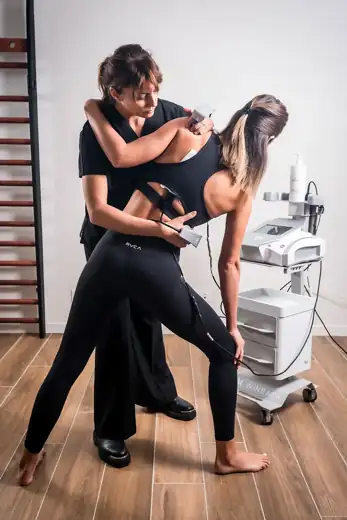
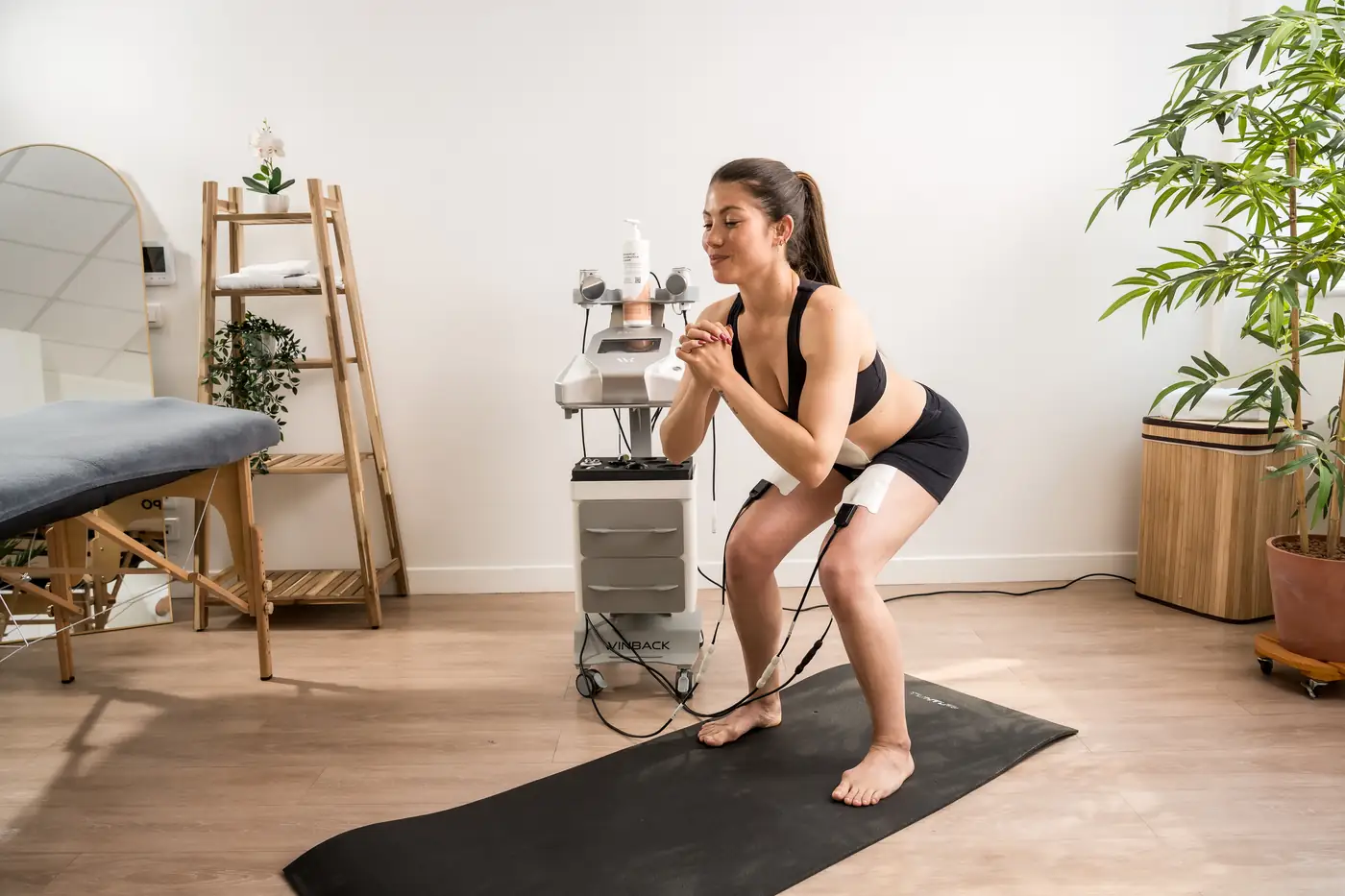
Hi-EMS uses a medium-frequency current to trigger strong muscle contractions. After injury or surgery, muscle often stops firing the way it should. Hi-EMS helps re-engage it, then builds strength as the patient progresses.
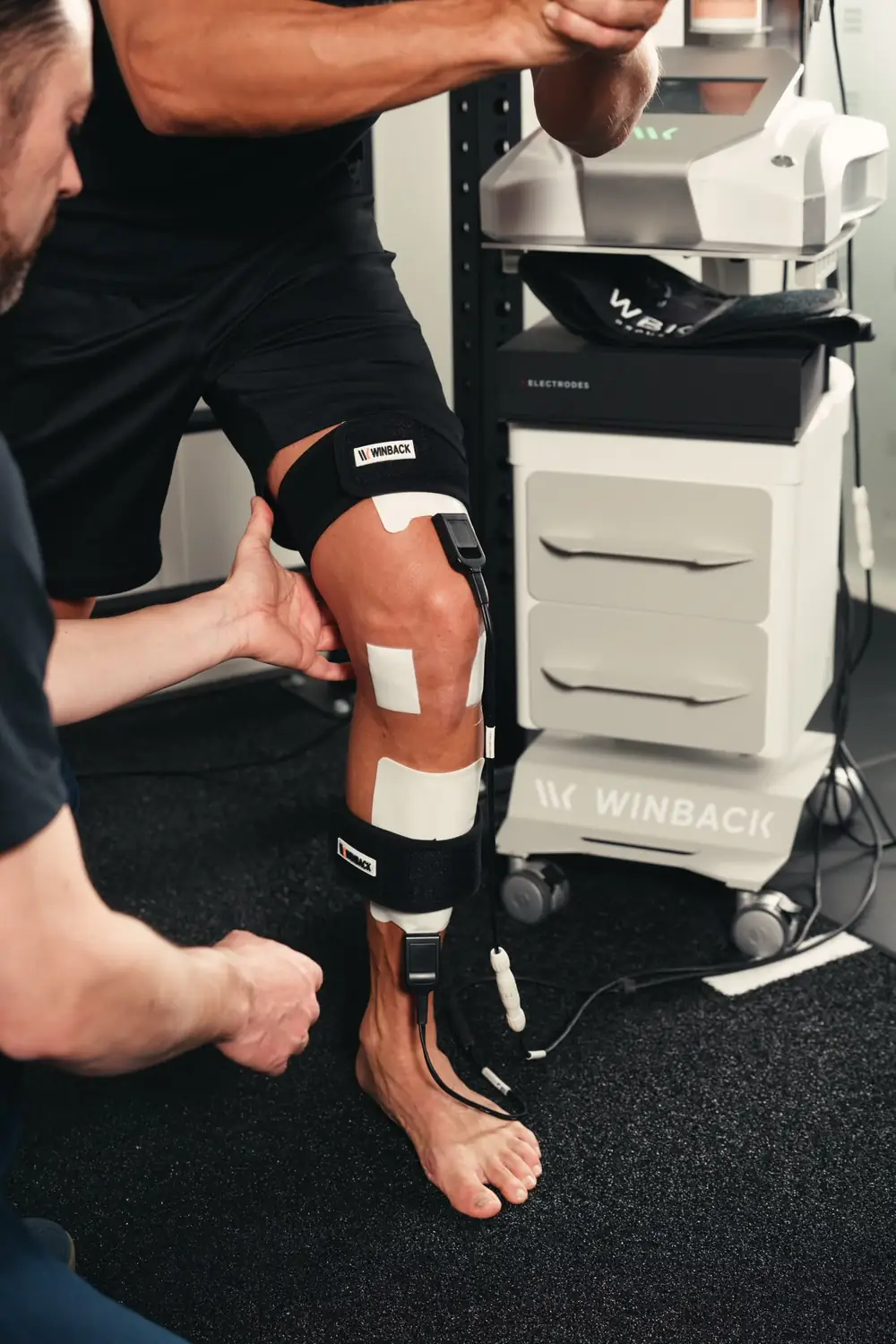
- Re-engage inhibited muscle, like the quad after knee surgery
- Hands-free, with adhesive electrodes and straps
- During movement, so activation happens inside the exercise
- Guided strength and performance programs in Care+
Manage pain so the plan can move forward.
Hi-TENS is Winback's pain-management current. When pain limits what a patient can tolerate, it helps settle things down so you can get on with manual work, loading and exercise.
- Early-stage and acute presentations
- Hands-on or hands-free
- Guided pain protocols in Care+
The same technology, a different job each week.
Each stage of care calls for different settings. Walk the journey to see them change.
How it compares.
TECAR works on tissue without pain or microtrauma, and it's one of the few technologies you can use through your hands, hands-free or during exercise. The full breakdown against shockwave, laser and ultrasound is on its own page.
- External, non-invasive and comfortable
- Fits inside a standard appointment
- Combines with manual therapy and exercise
- FDA-registered
The science, peer reviewed.
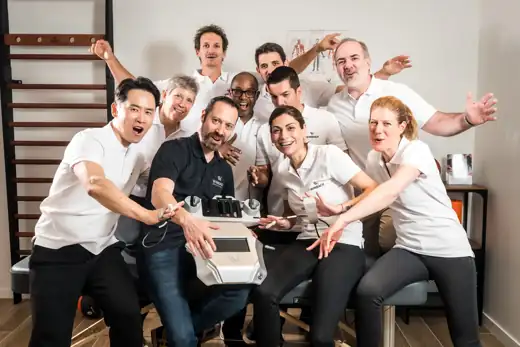
A clinical commentary by Winback clinicians Laura Ramus, Frédéric Delacour and Ken Johnson on the evolution, science and future of TECAR in rehabilitation, published in the International Journal of Sports Physical Therapy.
Read the articleFeel the difference.
The fastest way to understand TECAR is to have it done to you. Book a demo and we'll treat you first.
Questions we hear first.
What is TECAR therapy?
TECAR stands for Transfer of Energy Capacitive and Resistive. A high-frequency current passes through the body, so the energy works inside the tissue and patients feel gentle warmth. Every Winback device also includes Hi-EMS to activate muscle and Hi-TENS to manage pain.
Is it hard to learn?
This is the question we hear most. Every device includes personalized onboarding, and the guided protocols on board mean a newer clinician can deliver a structured session on day one while they build hands-on technique. Live webinars and courses continue for as long as you own it.
How is it different from laser, ultrasound or shockwave?
Those technologies do a specific job well. Winback is built to stay useful as the patient's goals change, and it works through your hands, hands-free or during exercise. There's a full breakdown on the technology comparison page.
How long is a session?
Most treatments run 10 to 20 minutes. Guided protocols run 20 to 30 minutes and can be delivered hands-free while you work with another patient.
What support do I get after I buy?
Personalized onboarding, ongoing access to the training team, live webinars and courses, plus activation support such as open houses and marketing materials to launch it with your patients. That's the Winback Ecosystem.
Book a demo
Tell us about your practice and the right person on our team will reach out.